
People are like onions
The Drama reminds us that we all have layers. The problem is that not everyone is willing to admit that.

Warning: this article contains spoilers.
Back in college, I had a friend who constantly made fun of me for being strict about punctuality. I attended every single class as if my life depended on it. She, on the other hand, would casually skip a few classes to go out for a smoke — a habit I found highly reprehensible and frequently criticized. To me, being a good student was crucial, and attending the classes was part of it.
Then, one day, I did the unthinkable: I skipped a class to join her. Standing there on our smoke escape, laughing for minutes about the hypocrisy and silliness of it all, I realized I was doing the exact thing I had judged so harshly just days before.
I was reminded of this exact dynamic while watching The Drama (2026).

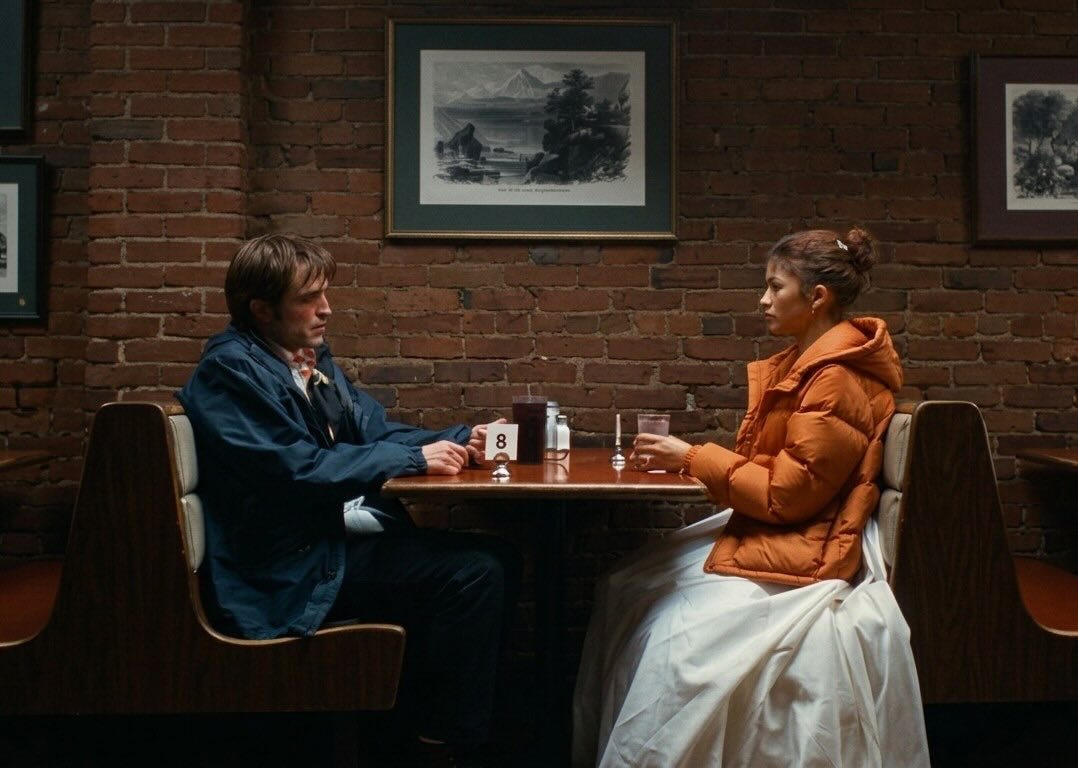
Written and directed by Norwegian Kristoffer Borgli, the movie premiered in March and tells the story of Emma (Zendaya) and Charlie (Robert Pattinson) who, a week before getting married, have dinner with their friends Rachel (Alana Haim) and Mike (Mamoudou Athie) where all of them agree to share the absolute worst thing they’ve ever done. While Rachel locked a kid with special needs in a closet inside an abandoned RV in the woods and left him there for hours (it is hinted that she might have left him there to die), Mike put his ex-girlfriend at risk of getting seriously injured by a dog, and Charlie bullied a guy online to the point that he had to move somewhere else, Emma planned a school shooting when she was around 15.
What follows is, in my opinion, a completely and absolutely disproportionate reaction. The catalyst is Rachel, who out of nowhere claims that Emma’s confession is a direct insult to her, given that her cousin was the victim of a school shooting. Everything that unfolds next stems from that single response. Charlie spirals, suddenly questioning everything about Emma’s character, her personality, and ultimately, their entire love story. From that moment forward, every memory seems to become stained by the past of the woman he loves, and Charlie is left wondering if he ever even knew that person. A candid moment gets twisted into something dark, and a traffic incident is seen as a red flag that there might be something inherently bad and violent about Emma.
It highlights what might be the central theme of the movie: you never truly know every aspect of the person you love. That holds true even after years together. Every individual is a universe of micro-details, hidden memories, and private actions and thoughts. It’s as if the other person is an entire galaxy, and you’ve only been permitted to explore a single planet. And, to me, that is for the best — even if only to allow a couple to always have room to talk and discover more of one another. There’s beauty in staying curious.
What is interesting, though, is that there are a few moments in the movie where you wonder if what Emma thought of doing is so outrageous to Charlie that he is unable to move on from it, or if others' perspective about it is what shapes his reaction. One is left wondering if he is staying true to his principles and ideals (and sometimes if he even has those), or only pursuing what others think is morally relevant to reprimand.
Here, Rachel is a central figure.
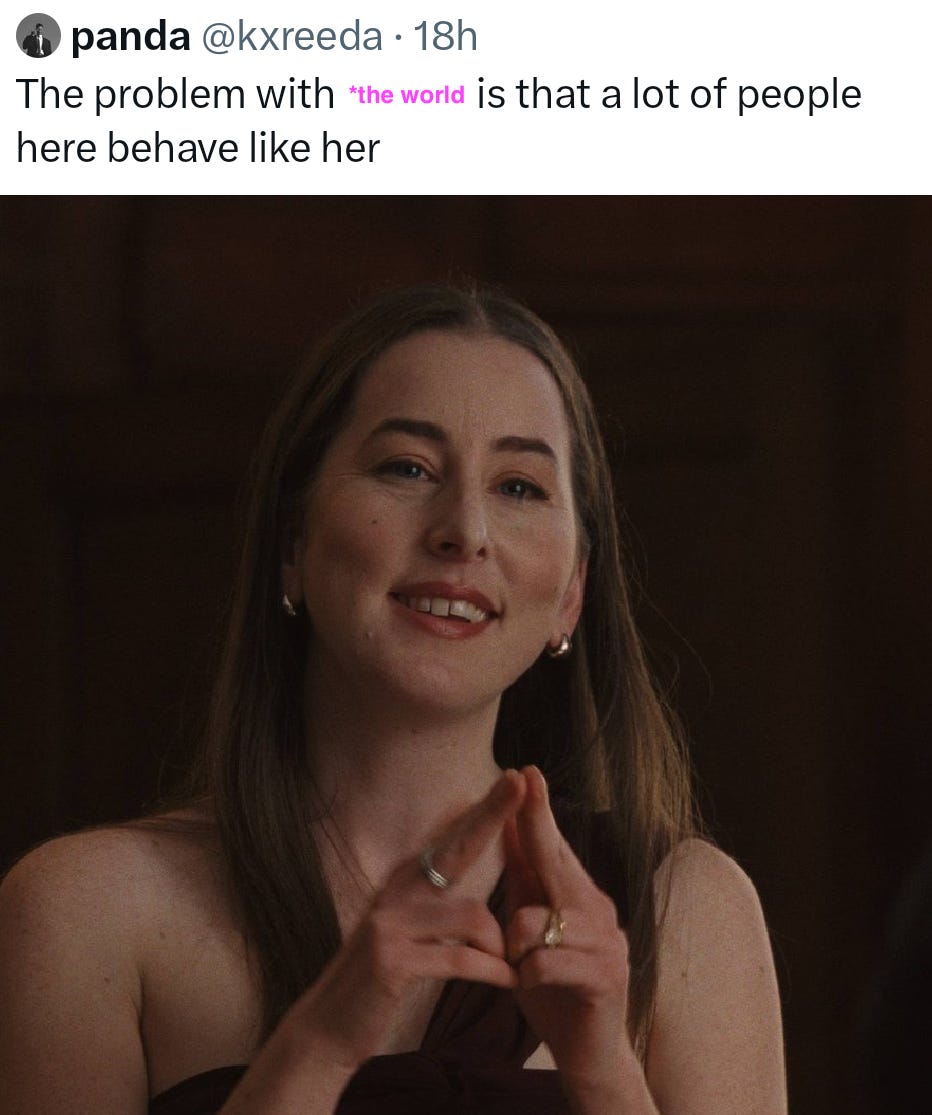
Emma never actually did anything, but her admitting to the mere thought of it seems way worse to others than if she had actually locked a kid with special needs up in an enclosed space without any means to get out. Rachel is, in my opinion, a big part of what is wrong with the internet discourse nowadays — and, unfortunately, sometimes, in real life as well. No one is allowed to be flawed anymore. No one is allowed to admit to doing something wrong or even thinking of doing so. There is no room for openly discussing controversial subjects and no room for apologies, forgiveness, or changing one’s mind. If you were not born flawless, or if you shared an inappropriate thought you had ten years ago, you are done.
And if you do share it, you might face public scrutiny to the point that you might consider isolating yourself completely, because there is no reason to try and argue when people have already made up their minds about you being the absolute worst person to ever walk this planet.
The thing is — these people, just like you, are onions. They too have layers to them; they just refuse to do some self-assessment before jumping to pointing fingers at others. Because ultimately, pointing fingers is easier, faster, and way less painful than acknowledging the parts of oneself that are also ugly, bad, violent, or even disgusting at times. The irony is that, to me, by pointing fingers, these people are only confirming the existence of that other side.
But I did say that Emma never acted on her impulse. And the beauty in Emma’s layers is that she found an alternative: instead of punishing herself or disregarding the part of her that can be violent, she invested in improving somehow, which brings me to one of my core beliefs — that punishment, isolation, and shame, rather than damage control, prevention, education, and reparation, only generate more chaos and, often, more violence. By joining a group of activists against gun violence and educating herself more and more through the power of community, she found a way out — one that allowed her to become a much more empathetic and kind human.
She became exactly the type of person capable of looking at someone struggling with addiction and recognizing that there is more to them than their struggle, and that they still deserve to be seen as a great professional. We see this early on when Emma is the first to object to Charlie’s impulse to fire their wedding DJ for using drugs, perfectly demonstrating the depth of her character before the chaos even begins.
We see that same side of her again toward the end, when she doesn’t think twice before giving Charlie another chance after he messes up so badly. What left some viewers a bit disappointed is, to me, a perfect ending. Emma re-introduces herself and allows Charlie to do the same. It’s as if she’s saying: here’s a blank page, here’s an opportunity for you to show me another one of your layers, pretending we just met. Please allow me to meet you, and allow me to introduce myself time and time again. Because you will never really fully know me, and I will never really fully know you, and I want to commit to you regardless.
This is what love is about.
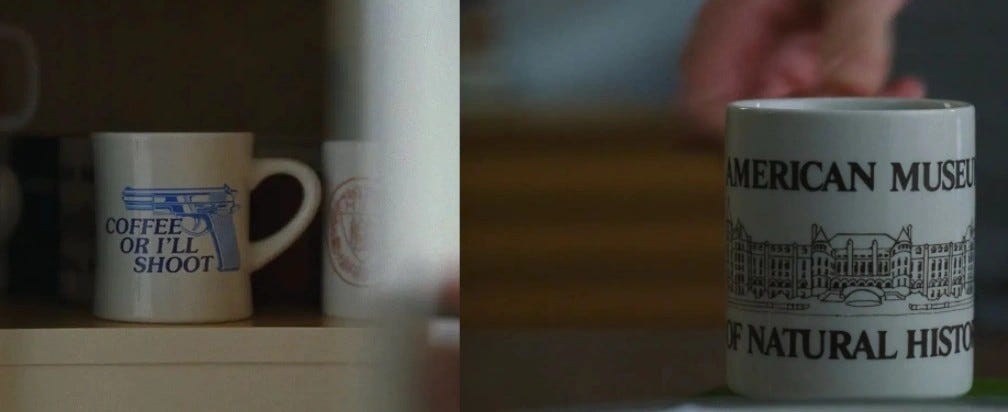
P.S. One aspect I really loved about the movie is that it makes it very clear to the audience that considering a mass shooting is a daily reality in a lot of Americans’ minds. At one point, Charlie sees one of the mugs they have at home — a funny one with a gun illustration — and throws it in the trash. The next scene shows him setting down a mug from the American Museum of Natural History, a detail I find to be absolutely brilliant. Gun violence is a part of the DNA of the United States, and trying to hide the thought away or not talk about it won’t make the reality less of a problem.
Versão em Português:
As pessoas são como cebolas
The Drama nos lembra que todos nós temos camadas. O problema é que nem todo mundo está disposto a admitir isso.
Na época da faculdade, eu tinha uma amiga que sempre me zoava por eu ser rigorosa com pontualidade e por frequentar todas as aulas como se a minha vida dependesse disso. Lembro perfeitamente que ela costumava matar algumas aulas para sair para fumar um ou dois cigarros, o que eu achava altamente repreensível e criticava com frequência. Para mim, ser uma boa aluna era crucial, e assistir às aulas fazia parte disso.
Até que, um dia, eu fiz o impensável: matei uma aula para me juntar a ela. Paradas ali na nossa escapadinha, rindo por minutos por causa da hipocrisia e da bobagem daquilo tudo, percebi que estava fazendo exatamente o que havia julgado de forma tão dura poucos dias antes.
Eu me lembrei exatamente dessa dinâmica enquanto assistia a The Drama (2026).
Escrito e dirigido pelo norueguês Kristoffer Borgli, o filme estreou em março e conta a história de Emma (Zendaya) e Charlie (Robert Pattinson) que, uma semana antes de se casarem, jantam com seus amigos Rachel (Alana Haim) e Mike (Mamoudou Athie). No jantar, todos concordam em compartilhar a pior coisa que já fizeram na vida. Enquanto Rachel trancou uma criança com necessidades especiais em um armário dentro de um trailer abandonado na floresta e a deixou lá por horas (há indícios de que ela possa ter feito isso para a criança morrer), Mike colocou sua ex-namorada em risco de se ferir gravemente por causa de um cachorro, e Charlie praticou bullying virtual com um cara a ponto de ele ter que se mudar para outro lugar, Emma planejou um tiroteio em massa na escola quando tinha cerca de 15 anos.
O que se segue é, na minha opinião, uma reação completa e absolutamente desproporcional. A catalisadora é Rachel, que, do nada, afirma que a confissão de Emma é um insulto direto a ela, visto que sua prima foi vítima de um tiroteio escolar. Tudo o que se desenrola em seguida nasce dessa única resposta. Charlie entra em uma espiral, questionando, do nada, tudo sobre o caráter de Emma, sua personalidade e, no fundo, toda a história de amor deles.
A partir daquele momento, cada lembrança parece ficar manchada pelo passado da mulher que ele ama, e Charlie se pega pensando se algum dia realmente a conheceu de fato. Um momento espontâneo é distorcido e transformado em algo sombrio, e um desentendimento no trânsito é visto como um sinal de alerta de que pode haver algo inerentemente ruim e violento em Emma.
Isso destaca o que pode ser o tema central do filme: você nunca conhece verdadeiramente cada aspecto da pessoa que ama, o que segue sendo verdade independente de há quanto tempo vocês estão juntos. Cada indivíduo é um universo de microdetalhes, memórias escondidas, ações e pensamentos privados. É como se a outra pessoa fosse uma galáxia inteira, e você só tivesse permissão para explorar um único planeta. E, para mim, isso é ótimo — nem que seja apenas para permitir que um casal sempre tenha espaço para conversar e descobrir mais um sobre o outro. Há beleza em seguir curioso.
No entanto, o que é interessante é que há alguns momentos no filme em que você se pergunta se o que Emma pensou em fazer é tão absurdo para Charlie que ele é incapaz de superar, ou se a perspectiva dos outros sobre o assunto é o que molda a reação dele. A gente se pega pensando se ele está sendo fiel aos seus princípios e ideais (e às vezes se ele sequer os tem), ou se está apenas agindo de acordo com o que os outros acham moralmente relevante repreender.
Emma nunca fez nada de fato, mas ela admitir o mero pensamento parece muito pior para os outros do que se ela tivesse realmente trancado uma criança com necessidades especiais em um espaço fechado sem qualquer meio de sair. Rachel é, na minha opinião, uma grande parte do que há de errado com o discurso da internet hoje em dia — e, infelizmente, às vezes na vida real também. Ninguém mais tem o direito de ser falho. Ninguém tem o direito de admitir que fez algo errado ou mesmo que pensou em fazer. Não há espaço para discutir abertamente assuntos controversos e não há espaço para pedidos de desculpas, perdão ou mudança de opinião. Se você não nasceu perfeito, ou se compartilhou um pensamento inadequado que teve dez anos atrás, acabou pra você.
E, se você compartilha, pode ser que venha a enfrentar o escrutínio público a ponto de considerar se isolar completamente, porque não há razão para tentar argumentar quando as pessoas já decidiram que você é a pior pessoa que já pisou neste planeta.
A verdade é que essas pessoas, assim como você, são cebolas. Elas também têm camadas; elas apenas se recusam a fazer uma autoavaliação antes de saírem apontando o dedo para os outros. Porque, no fundo, apontar o dedo é mais fácil, mais rápido e muito menos doloroso do que reconhecer as partes de si mesmo que também são feias, ruins, violentas ou até nojentas às vezes. A ironia é que, para mim, ao fazer isso, essas pessoas estão apenas confirmando a existência desse outro lado.
Mas eu disse que Emma nunca agiu por impulso. E a beleza nas camadas da Emma é que ela encontrou uma alternativa: em vez de se punir ou ignorar a parte de si que pode ser violenta, ela investiu em melhorar de alguma forma, o que me leva a uma das minhas crenças fundamentais — a de que a punição, o isolamento e a culpa, no lugar do controle de danos, da prevenção, da educação e da reparação, só geram mais caos e, frequentemente, mais violência. Ao se juntar a um grupo de ativistas contra a violência armada e se educar cada vez mais, por meio do poder da comunidade, ela encontrou uma saída — uma que lhe permitiu se tornar um ser humano muito mais empático e gentil.
Ela se tornou exatamente o tipo de pessoa capaz de olhar para alguém lutando contra o vício e reconhecer que há mais nela do que a sua luta, e que ela ainda merece ser vista como um grande profissional. Vemos isso logo no início, quando Emma é a primeira a se opor ao impulso de Charlie de demitir o DJ do casamento deles por usar drogas, demonstrando perfeitamente a profundidade do seu caráter antes mesmo de o caos começar.
Vemos esse mesmo lado dela novamente perto do final, quando ela não pensa duas vezes antes de dar outra chance a Charlie depois que ele erra feio com ela. O que deixou alguns espectadores um pouco decepcionados é, para mim, um final perfeito. Emma se reapresenta e permite que Charlie faça o mesmo. É como se ela estivesse dizendo: aqui está uma página em branco, aqui está uma oportunidade para você me mostrar mais uma de suas camadas, fingindo que acabamos de nos conhecer. Por favor, permita-me te conhecer, e permita-me me apresentar repetidas vezes. Porque você nunca vai me conhecer de verdade e por completo, e eu nunca vou te conhecer de verdade e por completo, e eu quero me comprometer com você de qualquer maneira.
E amor é sobre isso.
P.S. Um aspecto que eu realmente amei no filme é que ele deixa muito claro para o público que cogitar um tiroteio em massa é uma realidade diária na mente de muitos americanos. Em um certo momento, Charlie vê uma das canecas que eles têm em casa — uma engraçadinha, com uma ilustração de arma — e a joga no lixo. A cena imediatamente depois o mostra colocando na mesa uma caneca do Museu Americano de História Natural, um detalhe que acho absolutamente genial. A violência armada faz parte do DNA dos Estados Unidos, e tentar esconder esse pensamento ou não falar sobre o assunto não vai fazer com que a realidade seja menos problemática.
Amiga, que texto impecável! Amei demais o filme e mais ainda o teu olhar sobre ele. Rachel para mim é o retrato do que vemos de pior por aí, principalmente em mídias sociais: Cometeu a maior das atrocidades e mantém uma postura moralmente superior. é a reação exagerada e hipócrita dela que pauta o comportamento de todo o grupo, fazendo a partir daí o Charlie questionar todo o relacionamento. Tu foi brilhante, como sempre!